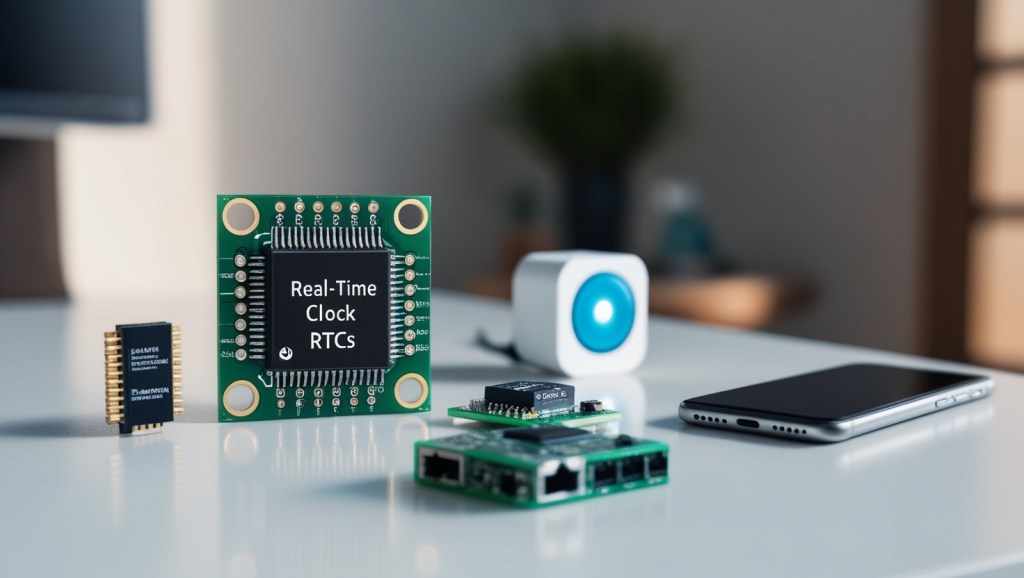
Real-time clocks (RTCs) are vital tools that help devices keep track of time accurately. From your smartphone to smart home devices, RTCs ensure everything runs smoothly. They are essential for managing schedules, logging events, and maintaining precise time. Keep reading to learn about the many applications of RTCs and how they make life easier.
Key Takeaway
- RTCs help devices maintain accurate time even when powered off.
- They play a crucial role in IoT devices, ensuring data is logged with precision.
- RTCs are essential in GPS technology for accurate location tracking.
How Real-Time Clocks Help Our Gadgets Keep Time
Source: Core Electronics
Real-time clocks, or RTCs, are small but important parts of many devices we use every day. They help everything from clocks to watches stay on schedule.
Some common gadgets that rely on RTCs:
- Wall Clocks: Big clocks on the wall need RTCs so they always show the right time.
- Alarm Clocks: Without an RTC, your alarm wouldn’t go off when you need to wake up!
- Digital Watches: Whether cheap or expensive, watches count on RTCs to display the correct time even with low batteries.
One handy thing about RTCs is that they remember the time even when a device is turned off. That means no resetting every time – just look and the time is there.
RTCs are made to last. They keep timepieces ticking accurately so folks can manage their days smoothly. Reliable timekeeping helps everyone, from getting to work on time to scheduling fun activities.
So in all sorts of everyday tech, from kitchen timers to Fitbits, you’ll find these tiny RTCs doing big work behind the scenes. They help make timekeeping effortless.
How RTCs Help Connect the Dots in IoT
In the world of connected devices, real-time clocks play a key supporting role. They help various gadgets communicate and work as a team.
RTCs are important for things like:
- Synchronization – Keeping all devices on the same page time-wise means they can coordinate without issues.
- Logging Events – Smart home systems count on RTCs to correctly record details like when doors open or lights turn on. This data is useful for seeing patterns.
- Efficiency – When devices agree on the time, they can respond quickly to commands. This makes interconnected systems smoother to use.
If devices didn’t have RTCs, they might not know when to take action or share info. That could cause delays or mixed-up communications.
RTCs help tie everything together. They ensure gadgets stay in sync, log events accurately, and work efficiently as parts of a coordinated whole. This makes connected homes more dependable and user-friendly overall.
How RTCs Help GPS Find Its Way

Real-time clocks play a key supporting role in GPS technology. Their precise timing is what allows location services to work smoothly.
- Timing is Crucial – GPS satellites rely on RTCs to send radio signals marked with accurate timestamps. This synchronization is important.
- Location Calculation – When a GPS device gets timestamps from several satellites overhead, it uses the timing data to determine the user’s precise coordinates.
- Satellite Coordination – RTCs allow satellites to schedule their communications. This helps them coordinate the signals that GPS receivers depend on.
The tracking would not be as accurate without reliable RTC timing. People count on GPS for turn-by-turn directions, tracking hikes and bike rides, and other location services (1).
Whether finding a new favorite restaurant or guiding a package delivery, GPS helps people and businesses every day. We can thank RTCs for the behind-the-scenes timing work that makes navigation possible.
How RTCs Help Buildings Run Like a Well-Oiled Machine
Real-time clocks play an important supporting role in smart building management systems. Their timing abilities help conserve energy and keep occupants comfortable.
- Scheduled Control – RTCs allow HVAC and other systems to power on and off automatically at set times. This ensures the building temperature is just right when people arrive.
- Energy Savings – By only running equipment when needed, buildings use less juice. That trims costs and shrinks their carbon footprint too.
- Comfort All-Around – Properly timed systems maintain a pleasant indoor climate around the clock. This improves satisfaction for everyone spending time inside.
RTCs also let buildings adjust settings based on occupancy. Empty rooms don’t need as much heating or cooling, saving even more energy.
In short, smart buildings depend on RTCs behind the scenes to control operations efficiently based on time of day. This helps facilities operate smoothly while cutting costs and doing right by the environment.
How RTCs Help Weather Experts Read the Forecast
Getting weather data down to the minute is crucial, and that’s where real-time clocks shine. RTCs play a key supporting role for weather monitoring stations.
- Timestamping – RTCs apply exact timetags to temperature, humidity, wind and other measurements as they’re recorded.
- Forecast Finesse – Meteorologists rely on timestamps to make sense of data trends and predict future conditions. Proper timing means sharper forecasts.
- Pattern Prowess – RTCs help scientists track small changes in weather patterns over days, months and years. This improves understanding of these systems.
Without accurate RTC timing, it would be tough to pinpoint when events happened. And data from different stations needs common timing to allow easy comparisons.
Whether you’re a storm chaser or just want to dress for the day’s weather, experts counting on monitoring station data can thank RTCs behind the scenes. Their precise timekeeping helps forecasters read all the signs in the sky.
How RTCs Keep Printers and Copiers on Schedule
Smooth timing is important for printers and copiers, and that’s an area where real-time clocks shine. RTCs handle several behind-the-scenes tasks:
- Job Queueing – They make sure print jobs start and finish as planned so work gets done on deadline.
- Usage Tracking – Monitoring how often devices are used helps businesses understand supply and maintenance needs.
- Preventive Care – Accurate logging allows printers to alert users when routine maintenance is due, like after a certain page count.
Relying on RTC timekeeping leads to better operational efficiency. Machines run smoothly with a predictable schedule, saving folks time otherwise spent waiting.
With RTC-managed maintenance too, downtime is reduced (2). Employees face fewer frustrations and can stay focused on core tasks.
So next time you send a print job, offer thanks to the little RTC making sure it comes out on time!
Embedded Systems

In embedded systems, Real-Time Clocks (RTCs) play a crucial role in keeping track of time. They help devices remember important moments and manage tasks that depend on timing. For instance, in medical devices, RTCs are essential for scheduling tasks and recording patient information. This ensures that every second is counted accurately, which is vital in situations where timing matters a lot.
Importance of RTCs in Embedded Systems
RTCs are like the timekeepers for embedded systems. They help in several ways:
- Event Logging: RTCs can log events, which means they keep a record of what happens and when. This is important for tracking changes over time.
- Task Scheduling: Devices can use RTCs to schedule tasks. For example, a medical device might need to take readings at specific times. The RTC helps make sure this happens.
- Accuracy: In critical applications, having accurate time is essential. RTCs ensure that devices operate correctly and on schedule.
Applications of RTCs
RTCs are used in many different types of embedded systems. Here are a few examples:
- Medical Devices: These devices rely on RTCs to log patient data and schedule treatments. For instance, a heart monitor may record the time of each heartbeat.
- Home Appliances: Some appliances, like ovens or washing machines, use RTCs to time cooking or washing cycles. This helps them work efficiently.
- Automotive Systems: Cars use RTCs to track time for various functions, such as maintenance reminders or navigation systems.
Benefits of Using RTCs
Using RTCs in embedded systems provides several benefits:
- Reliability: RTCs help ensure that devices work as expected. They keep time even when the device is turned off.
- Efficiency: By scheduling tasks accurately, RTCs help devices run smoothly and save energy.
- Data Integrity: Accurate timekeeping helps maintain the integrity of logged data. This is especially important in fields like healthcare.
RTCs are essential for timekeeping in embedded systems. They help devices log events, manage tasks, and ensure accuracy in critical applications.
Gaming

Credits: pixabay.com (Photo by: Anthony Ashley)
Video games can create exciting experiences with the help of Real-Time Clocks (RTCs). These clocks allow games to mimic real-world time, like having day and night cycles. This feature makes the game world feel more alive and engaging. Players can see the time change, which adds depth and realism to their gaming experience.
How RTCs Enhance Gameplay
RTCs improve gameplay in several ways:
- Realistic Time Cycles: Many games use RTCs to change the environment based on the time of day. For example, a game might start in bright daylight and shift to a starry night. This change makes the game feel more immersive.
- Dynamic Events: Some games have events that only happen at certain times. For instance, a character might only appear at night. RTCs help manage these events, making the game more interesting.
- Player Interaction: Players can plan their actions based on the in-game time. If a quest requires a player to visit a location at sunset, they can strategize accordingly.
Examples of RTC Use in Games
Many popular games use RTCs to enhance the experience. Here are a few examples:
- Animal Crossing: This game uses real-world time to change seasons and events. Players can enjoy different activities depending on the time of day.
- The Legend of Zelda: Breath of the Wild: In this game, the time of day affects gameplay. Certain enemies and events appear only at specific times.
- Minecraft: The day and night cycle impacts gameplay. Players must prepare for nighttime when monsters come out.
Benefits of RTCs in Gaming
Using RTCs in video games offers several benefits:
- Increased Immersion: Players feel more connected to the game world when it reflects real time. This makes the experience more enjoyable.
- Enhanced Strategy: Players can make better decisions based on the time of day in the game. This adds a layer of strategy to gameplay.
- Variety in Gameplay: RTCs create different experiences for players. Each session can feel unique based on the in-game time.
RTCs play a vital role in making video games more engaging. They help create realistic time cycles, manage dynamic events, and enhance player interaction. This technology adds depth and excitement to the gaming experience.
RTC in Manufacturing

Credits: pixabay.com (Photo by: Tasukaran)
In manufacturing, Real-Time Clocks (RTCs) are essential for keeping everything on track. These clocks help machines and processes run smoothly and on time. They play a key role in scheduling operations and accurately logging production data. This timekeeping is crucial for factories to maintain efficiency and meet deadlines.
How RTCs Improve Manufacturing Processes
RTCs help in various ways:
- Scheduling Operations: Factories use RTCs to plan when machines should start and stop. This ensures that production runs without delays.
- Logging Data: RTCs record important information about production times. This data helps managers understand how well the factory is performing.
- Triggering Alarms: RTCs can set off alarms for machine maintenance. This helps prevent breakdowns and keeps machines running smoothly.
Examples of RTC Use in Manufacturing
Many manufacturing processes benefit from RTCs. Here are a few examples:
- Automotive Assembly Lines: In car manufacturing, RTCs help coordinate the timing of different parts being assembled. This ensures that everything comes together at the right moment.
- Food Production: In food factories, RTCs manage cooking and packaging times. This helps maintain quality and safety standards.
- Electronics Manufacturing: RTCs are used to schedule the assembly of electronic components. This helps meet tight deadlines and customer demands.
Benefits of Using RTCs in Manufacturing
Using RTCs in manufacturing brings several advantages:
- Increased Efficiency: By keeping everything on schedule, RTCs help factories run more efficiently. This can lead to higher production rates.
- Better Quality Control: Accurate timekeeping helps ensure that products are made correctly and on time. This improves overall quality.
- Reduced Downtime: With alarms for maintenance, RTCs help prevent unexpected machine failures. This keeps production lines running smoothly.
In summary, RTCs are vital in the manufacturing sector. They help ensure that machines and processes run on time, manage operations, and log production data accurately. By keeping everything organized, RTCs contribute to smoother and more efficient manufacturing operations.
RTC in Education

Real-Time Clocks (RTCs) play an important role in education. They are found in many devices, from classroom clocks to computers. Here’s how they help in schools:
- Accurate Timekeeping: RTCs keep track of time accurately. This is essential for scheduling classes and managing assignments. When the clock is right, everyone stays on track.
- Timestamping Assignments: Digital learning tools use RTCs to record when assignments are submitted. This feature helps students meet deadlines. It ensures that everyone is held accountable for their work.
- Timed Tests and Quizzes: RTCs are crucial for activities that need precise timing. For example, during timed tests, students must complete their work within a set period. RTCs help monitor the time, ensuring fairness for all students.
RTCs also support various classroom technologies. They can be found in smartboards, projectors, and other devices that enhance learning.
Teachers benefit from RTCs too. They can plan lessons more effectively when they know the exact time. This helps create a structured learning environment.
Overall, RTCs are essential in educational settings. They help keep everything running smoothly, from managing schedules to ensuring students meet deadlines. By using RTCs, schools can create a more organized and efficient learning experience for everyone involved.
Conclusion
To wrap up, real-time clocks are essential in various applications. They ensure devices keep accurate time, manage schedules, and synchronize operations. From consumer electronics to GPS systems, RTCs play a vital role in modern technology.
FAQ
How does a real time clock maintain accuracy during power outages?
A real time clock relies on backup power, typically from a coin cell or lithium battery, to keep time when main power fails. The rtc ic continues running in low power mode, using minimal supply current while maintaining accuracy through its quartz crystal oscillator.
What’s the relationship between real time clocks and time zones?
Real time clocks track local time and can adjust across time zones. When network time updates occur, the rtc plays a crucial role in synchronizing system time with atomic clock references, ensuring time based operations remain accurate regardless of geographic location.
How long can rtc modules operate on battery power?
Battery life depends on several factors. In sleep mode, ultra low power consumption allows rtc chips to run for years on a single coin cell. The timing chain remains active while other clock functions enter low power mode, maximizing battery backed operation.
What makes quartz crystals ideal for time keeping in RTCs?
Quartz crystals provide highly accurate time management through consistent oscillation. When combined with proper hardware timers, they enable high accuracy time tracking far superior to traditional wall clock mechanisms, making them perfect for creating a reliable clock source.
How do real time clocks handle calendar complexities?
RTCs automatically adjust for the passage of time, including the day of the week and leap year calculations. They maintain system clock accuracy across power state changes, ensuring events occur at precisely scheduled times through sophisticated timing chain mechanisms.
What features help RTCs minimize power consumption?
Current time tracking continues through multiple power saving modes. Ultra low power designs, combined with efficient alarm interrupt systems, allow rtc modules to operate on minimal supply current while maintaining timekeeping accuracy.




 Abel's Portfolio
Leave a comment